

Facebook Link Post Limit Test: What It Means for Marketers
In December 2025, Facebook began testing a change that could significantly reshape how brands and creators share external links on the platform. Multiple trusted industry sources reported that Facebook is experimenting with limiting the number of link posts that professional accounts and business pages can publish each month unless they subscribe to Meta’s paid features.
This test has raised important questions for digital marketers, small business owners, creators, and local businesses who rely on Facebook as a traffic and conversion channel. Understanding what is being tested, what is not affected, and how to adapt is critical to protecting reach and maintaining trust with audiences.
Why Facebook’s Link Post Test Matters to Digital Marketers
For years, Facebook has gradually reduced organic visibility for posts that send users off the platform. Link posts, in particular, have seen declining reach compared to videos, Reels, and image-based content. This new test represents a more direct step in that direction.
For digital marketers managing social media marketing strategies, this is not a small algorithm tweak. It affects how often links can be shared organically, how traffic campaigns are structured, and how brands plan monthly content calendars. For small business owners and local businesses, it may change how offers, booking links, and announcements are shared.
What Exactly Is the Facebook Link Post Limit Test?
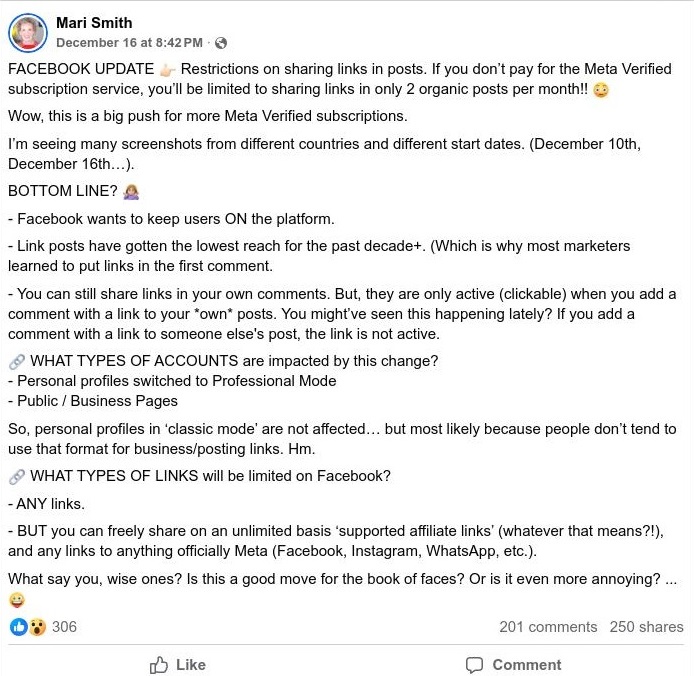
According to reports first highlighted by social media expert Mari Smith on December 16, 2025, Facebook is testing a restriction that allows only two link posts per month for professional profiles and business pages that are not subscribed to Meta’s paid offerings.
These limits apply specifically to posts that include external URLs in the main feed. The test is currently limited in scope and not rolled out globally, but Meta has confirmed to multiple outlets that it is experimenting with link-sharing restrictions as part of a broader evaluation of paid features.
At this stage, Facebook has not issued a universal announcement, which suggests the platform is gathering data and feedback before deciding on wider implementation.
Why Facebook Is Testing Link Sharing Restrictions
Facebook’s core business depends on keeping users engaged within its ecosystem. External links reduce time spent on the platform and limit exposure to ads and native content. Over time, Facebook has prioritised formats that keep users scrolling, watching, and interacting without leaving the app.
This test also aligns with Meta’s broader monetisation strategy. By placing limits on link sharing, Facebook can position paid subscriptions as a solution for businesses and creators who need higher distribution freedom. At the same time, the test helps Facebook reduce spam, misleading links, and low-quality promotional posts that harm user experience.
Who Is Affected by This Test and Who Is Not
The test mainly affects digital marketers, creators, publishers, and business pages that post links frequently. Personal profiles that do not use Professional Mode may not encounter the limit immediately.
It is important to note that this test currently applies only to link posts in the main feed. Based on available reports, Facebook does not restrict the following:
- Links shared in comments, including the first comment on your own post
- Links pointing to Meta-owned platforms such as Facebook pages, Instagram profiles, or WhatsApp
- Traffic driven through Instagram bios, Stories, or WhatsApp messages
This distinction matters because it gives marketers flexibility to adjust strategies without losing all referral traffic.
Free vs Paid Posting: What the Test Suggests
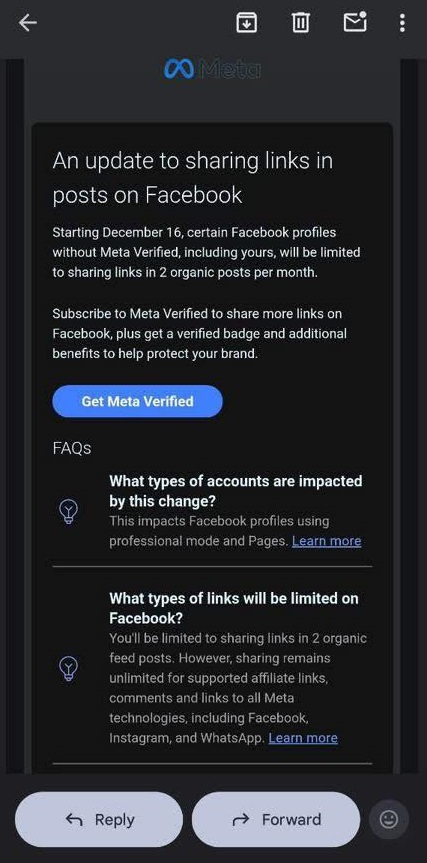
Under the test, non-paid professional accounts may be limited to two external link posts per month. Meta Verified or paid accounts may receive higher or unlimited link-posting allowances, although pricing and exact benefits vary by region and are still being tested.
This does not mean Facebook is banning links. Instead, it signals a shift where link distribution becomes a premium feature rather than an unlimited free option.
What This Means for Small Business Owners and Local Businesses
For small business owners, this update may initially feel restrictive. Many local businesses rely on Facebook to share website links, appointment pages, menus, or event announcements.
However, fewer link posts may also lead to higher quality engagement. When businesses share links less frequently, each link post becomes more intentional and trustworthy. Users may be more likely to click when links are not overwhelming their feed.
Local businesses can also rely more on community-driven posts, visual storytelling, and conversation-based content to maintain reach between link posts.
How This Impacts Social Media Marketing Strategies
Social media marketing strategies will need to evolve. Instead of daily or frequent link posts, marketers will need to prioritise content that builds context and trust before asking users to click.
Native posts, short videos, carousels, testimonials, and behind-the-scenes content will become more important. When a link is shared, it should feel valuable, relevant, and well-timed.
For creators and publishers, this test reinforces the importance of building audiences across multiple platforms rather than relying on Facebook alone for traffic.
What About Links in Comments, Stories, Instagram or WhatsApp?
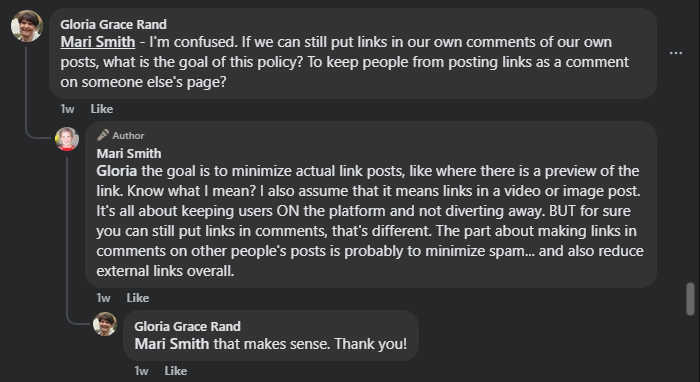
Based on current reports, Facebook’s test does not restrict links placed in comments. Many marketers already use the first-comment strategy to drive traffic while maintaining reach.
Industry experts explaining why Facebook limits link posts but still allows links in comments
Instagram and WhatsApp remain unaffected by this test. Links in Instagram bios, Stories, and WhatsApp messages continue to work as usual. This gives creators and businesses an opportunity to distribute links across Meta’s ecosystem without hitting the feed-post limit.
A Trust-Based Shift: Why This May Benefit Marketers
From a long-term perspective, this change could improve link quality across Facebook. When links are limited, low-value and spammy posts decrease. This may increase user trust in the links they do see.
Fewer link posts could lead to higher intent clicks, better engagement, and stronger credibility for businesses that share meaningful content. In this sense, Facebook may be moving toward a trust-based distribution model rather than a volume-based one.
Final Thoughts
Facebook’s link post limit test marks a meaningful shift in how content distribution may work going forward. For digital marketers, creators, small business owners, and local businesses, this is a signal to adapt strategies rather than panic.
By focusing on trust, value, and intentional link sharing, marketers can continue to succeed even with fewer link posts. If implemented widely, this update may reduce noise, improve content quality, and increase confidence in the links users choose to click.
As Facebook continues testing, staying informed and flexible will be the key to maintaining reach and performance in a changing social media landscape.
Read the Next Blog: What Is AI Slop? Why Low-Quality AI Content Is Taking Over the Internet